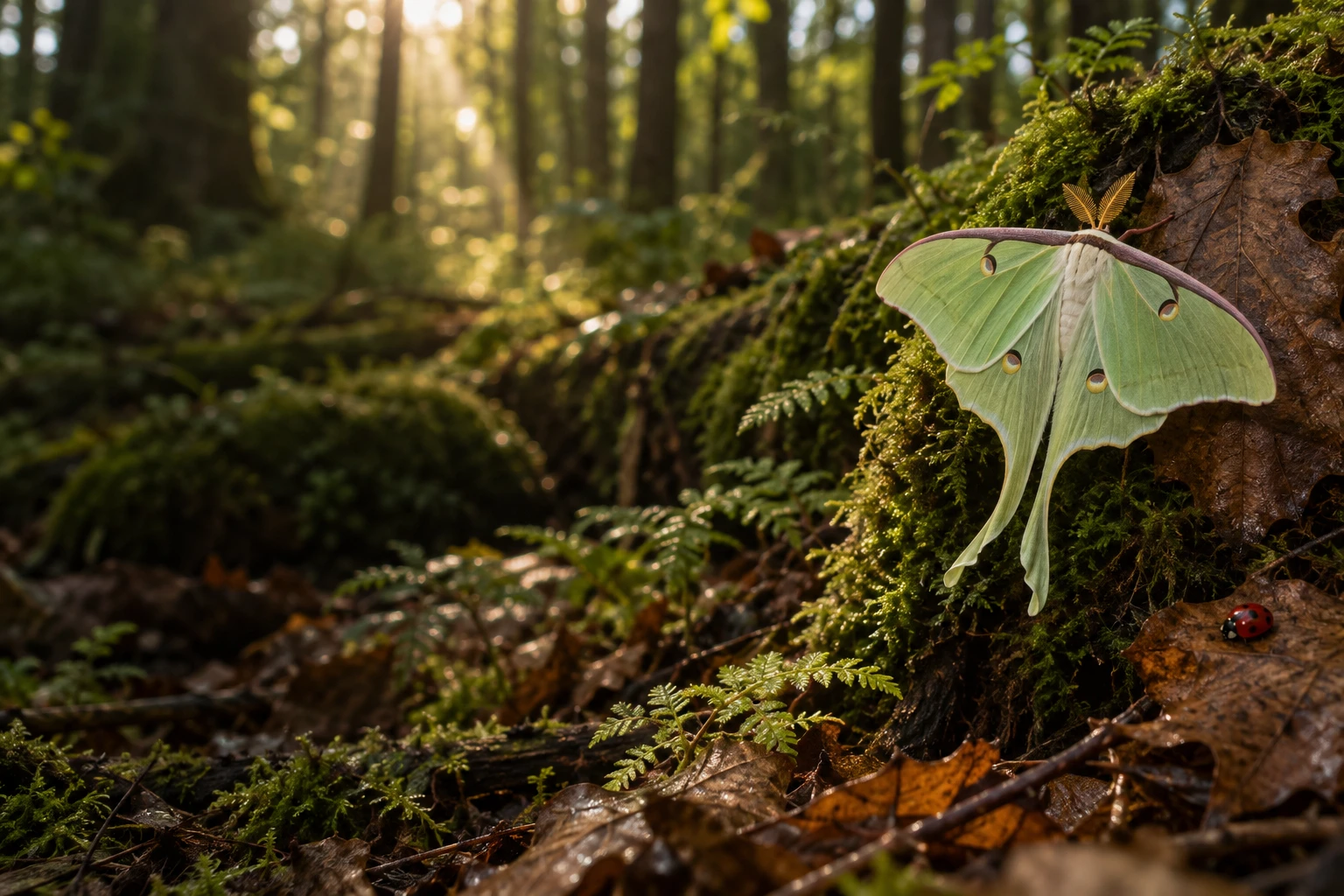
LOOK A LITTLE CLOSERThere’s a whole world down here.
Woodland illustration
Your next discovery is closer than you think. Indiana 188 species to explore
FIELD NOTES
A better way to look closely.
Practical habits for finding, photographing, and identifying small wildlife without turning a quiet encounter into a disturbance.
Indiana188 sourced entries
01
Let weather choose the route
Warm, still mornings bring pollinators to open flowers. Sunny path edges invite basking butterflies and dragonflies. After dusk, porch lights and a white sheet can reveal moths and other nocturnal visitors—observe briefly and switch lights off when you are done.
Scan flower heads before walking into the patch.
Check leaf undersides, bark seams, stems, and water edges.
Return in another season; adult activity changes through the year.
02
Build an identification from several clues
Start with the whole animal: number of legs, antenna shape, wing position, body proportions, markings, and behavior. Add habitat, location, and season. Color alone is rarely enough, and photographs cannot always support a species-level identification.
StructureMarkingsBehaviorPlace + season
“Bug” is used here in the everyday sense. True bugs are Hemiptera; spiders are arachnids with eight legs rather than six.
03
Make a useful photo set
Context: include the plant, nest, water edge, or surface.
Whole animal: photograph from above and from the side.
Details: capture antennae, legs, wing pattern, and distinctive marks.
Scale: use a nearby leaf or familiar object without touching the animal.
04
Leave the scene intact
Photograph animals where you find them. Do not pull apart nests, peel loose bark, trample host plants, or handle an unfamiliar species for a better angle. Give stinging insects, egg cases, webs, and colonies extra space.
Card safety notes describe ordinary observation, not personal medical risk. Seek professional medical help for severe symptoms or a suspected serious allergic reaction.
05
Turn a sighting into a useful record
Keep the original date and location, add several clear photographs, and note behavior or habitat you could see directly. If the animal is sensitive, use a platform’s location-obscuring controls rather than publishing a precise site.
Curated, sourced, and intentionally not called complete.
This edition presents 188 documented species for Indiana. It is a field-friendly selection, not a complete state checklist or a live-sighting feed. Each species card links to an identification reference, occurrence records, photo credit, and reusable image license.